Archive navigation
Knowledge Path
Thinker
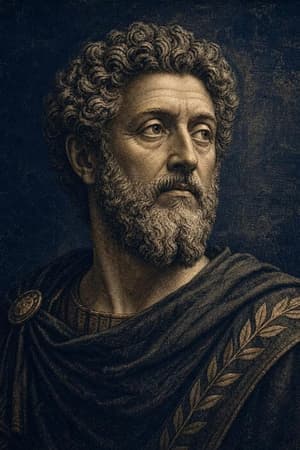
Marcus Aurelius
Philosophy
Wisdom Concepts
Quotation archive
Selected Quotes
“The perfection of character is this — to live each day as if it were your last, without frenzy, without laziness, without pretense.”
“If you are pained by external things, it is not they that disturb you, but your own judgment of them. And it is in your power to wipe out that judgment now.”
“Remember how long you've been putting this off, how many extensions the gods gave you, and you didn't use them. At some point you have to recognize what world it is that you belong to; what power rules it and from what source you spring; that there is a limit to the time assigned you, and if you don't use it to free yourself it will be gone and will never return.”
“The best way to avenge yourself is to not be like the wrongdoer.”
“People try to get away from it all — to the country, to the beach, to the mountains. You too wish to get away. But that is undignified. You can get away from it all whenever you want, by retiring into yourself. Nowhere can a person find a quieter or more untroubled retreat than in his own soul.”
“Is any man afraid of change? Why, what can take place without a change? Can anything that is useful or for the good of the universe be accomplished without change? Do you not see, then, that change in yourself is of the same order, and no less necessary to the nature of the universe?”
“Wipe out the imagination. Stop the pulling of the strings. Confine yourself to the present.”
“The people you deal with today will be meddling, ungrateful, arrogant, dishonest, jealous, and surly.”
“Everything that happens is either endurable or not.”
“The impediment to action advances action. What stands in the way becomes the way.”
“The best revenge is not to be like that.”
“Do the right thing. The rest doesn't matter.”
“My formula for greatness in a human being is amor fati: that one wants nothing to be different, not forward, not backward, not in all eternity.”
“Contemplation is the highest activity of the human soul, and the one that brings the most perfect happiness.”
“You have power over your mind — not outside events. Realize this, and you will find strength.”
“It is not because things are difficult that we do not dare; it is because we do not dare that they are difficult.”
Marcus Aurelius
Biography
Marcus Aurelius was Roman emperor from 161 to 180 CE and a Stoic philosopher. He is unusual in the history of philosophy because his most famous work, Meditations, was written by a ruler with extensive political and military responsibilities. The text is not an official statement of policy or a public autobiography. It is a collection of personal reminders through which Marcus rehearses philosophical commitments.
The Stanford Encyclopedia of Philosophy describes Meditations as a rare opportunity to see how an ancient emperor attempted to live a Stoic life. That description is useful, but it should not turn Marcus into an uncomplicated model. His life and reign belong to the institutions, conflicts, and inequalities of the Roman Empire. His philosophical importance lies in the tension between public power and repeated self-examination.
Historical Context
Marcus ruled during the Antonine period, a second-century phase of the Roman Empire often remembered for relative stability but also marked by warfare, disease, succession pressures, and extensive administration. His role as emperor required decisions about armies, provinces, law, and court politics. Those conditions form the background to the practical urgency of his reflections on duty, reputation, loss, and death.
Stoicism had already developed for centuries by Marcus’s lifetime. Greek founders supplied its formal doctrines; Roman writers such as Seneca and Epictetus gave it influential ethical forms. Marcus inherited this tradition rather than creating it. His writing repeatedly acknowledges teachers, especially the influence of Epictetus, while adapting Stoic exercises to his own circumstances.
Core Ideas
Self-discipline in Marcus’s thought is the discipline of attention. A person should not assume that the first appearance of an event gives its true value. By examining impressions and refusing to make reputation, comfort, or anger sovereign, one can act more deliberately.
Inner control does not mean control over the world. Stoic practice distinguishes one’s judgments and choices from many external events that cannot be commanded. The point is not resignation in every circumstance; it is responsibility for the quality of one’s response.
Duty is equally important. Marcus treats human beings as social and rational creatures, bound to cooperate and to act justly. Rational living, for him, means aligning action with reason and social responsibility rather than pursuing impulse or status. These themes are connected: private self-command without justice would not meet the Stoic ideal.
Philosophy
Marcus Aurelius belongs to the Roman Stoic tradition, but Meditations is not a complete manual of Stoicism. It concentrates on ethical exercises: accepting change, questioning angry judgments, remembering mortality, and returning to one’s obligations. The wider Stoic system also included logic and physics, and readers should consult Epictetus, Seneca, and scholarly accounts to understand that broader context.
His philosophical voice is often corrective rather than declarative. He writes to remind himself what he already takes Stoicism to require. That form explains why passages can sound severe or repetitive: they are tools of moral training, not slogans designed for public circulation.
Major Works
The major work associated with Marcus Aurelius is Meditations, a Greek collection conventionally divided into twelve books. Its title and organization are editorial conventions; it was likely intended for personal use. A reliable citation should identify both a named translation and the book and section number, since English renderings can differ substantially.
Marcus is also associated with official correspondence and imperial documents, but Meditations is the principal text for understanding his philosophical reception. It should not be used alone as a historical source for the whole of his reign.
Famous Quotes
This archive avoids unattributed “Marcus Aurelius quotes.” Future quotation entries will use a named translation of Meditations and give a book and section reference. The text’s short, self-directed passages are especially easy to detach from their setting; an accurate quotation must make clear whether it is a translation, a paraphrase, or an editorial explanation.
Influence Today
Marcus Aurelius remains influential in discussions of leadership, discipline, resilience, and mortality. His popularity has also encouraged a simplified image of Stoicism as emotional suppression or solitary toughness. A more faithful reading restores the themes of justice, social cooperation, and the limits of individual control.
His continuing appeal lies in the honesty of the exercise: someone with unusual authority repeatedly asking how to meet ordinary human frustrations without abandoning judgment or duty. Modern readers may revise aspects of the ancient framework while still learning from that practice of self-scrutiny.
Sources
- Stanford Encyclopedia of Philosophy, “Marcus Aurelius.” Scholarly overview of the author and Meditations.
- Internet Encyclopedia of Philosophy, “Aurelius, Marcus.” Context for the work and its Stoic themes.
- Marcus Aurelius, Meditations, trans. Gregory Hays (Modern Library, 2002). Use a named edition and book/section reference for future quotations.
Learning Path
Part of a Structured Collection
Stoic Wisdom
A learning path through Stoic philosophy, virtue, resilience, inner peace, and the art of living with purpose.
Continue learning path →
Understanding Reality
A learning path through truth, knowledge, reality, and perception — from Plato to existential philosophy.
Continue learning path →
Ancient Wisdom
A learning path through foundational questions of flourishing, virtue, harmony, duty, and the art of living.
Continue learning path →
Life Questions
A learning path through enduring questions of happiness, meaning, purpose, fear, courage, and living well.
Continue learning path →
A Guide to Stoicism
A structured learning path through Stoic ideas of judgment, virtue, discipline, fear, duty, and inner peace.
Continue learning path →
Continue Learning
Knowledge NetworkNext Step
Continue your learning path
- quote
Preparing to Meet Difficult People
Related through Stoicism
- book
Meditations
Related through Stoicism
- topic
Discipline
Related through Stoicism
- answer
Exploring Stoic Practice
Related through Stoicism
- answer
How do I practice Stoicism?
Related through Stoicism
- answer
How to Control Anger?
Related through Stoicism
- answer
How to Deal with Change?
Related through Stoicism
- answer
How to Find Inner Peace?
Related through Stoicism
Archive references
Sources
- 01Marcus AureliusBy Stanford Encyclopedia of PhilosophyConsult source
- 02Aurelius, MarcusBy Internet Encyclopedia of PhilosophyConsult source
- 03MeditationsBy Marcus Aurelius; translated by Gregory HaysNew York: Modern Library, 2002.
ZHAIBIAN Editorial Board reviewed
Reviewed by ZHAIBIAN AI Editorial Review · 2026-07-21