Archive navigation
Knowledge Path
Thinker
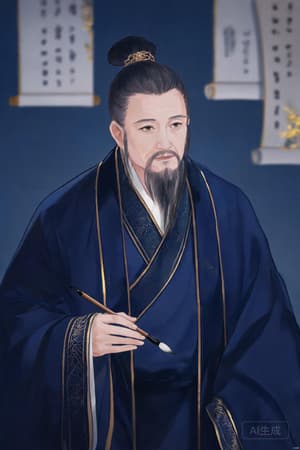
Zhu Xi
Wisdom Concepts
Quotation archive
Selected Quotes
“No man is devoid of a heart sensitive to the suffering of others. Suppose a child were about to fall into a well: anyone who saw it would experience a heart of alarm and distress. This would not be in order to gain favor with the child's parents, or to seek praise from neighbors and friends, or out of dislike for the child's cries.”
“The heart of compassion is the sprout of humaneness. The heart of shame is the sprout of rightness. The heart of deference is the sprout of ritual propriety. The heart of right and wrong is the sprout of wisdom. People have these four sprouts just as they have four limbs.”
“He who exerts his mind to the utmost knows his nature. He who knows his nature knows Heaven. To preserve one's mind and nourish one's nature is the way to serve Heaven.”
Biography
Zhu Xi (1130-1200) was a Chinese philosopher, educator, and commentator who lived during the Song dynasty. He is widely regarded as the most influential figure of the philosophical movement later called Neo-Confucianism, and his interpretations shaped the study of Confucian texts for centuries. The dates of his life and the broad outline of his career are well documented in historical records, though his biography is inseparable from his later canonical status.
Historical Context
Zhu Xi worked in a period when Buddhist and Taoist traditions were influential in Chinese intellectual life and when Confucian learning was being reorganized through examination and education. He responded by offering a systematic reading of the Confucian classics that aimed to provide a firm metaphysical and moral foundation for self-cultivation, ethics, and social order.
Core Ideas
Zhu Xi is associated with the concepts of li (principle or pattern) and qi (vital force or material energy). He held that principle gives structure to reality and that human beings can come to understand it through careful study and cultivation. His method emphasized the “investigation of things”: by examining the patterns of the world, texts, and history, the learner comes to realize principle in their own character and action.
Philosophy
Zhu Xi offered a metaphysics in which principle and vital force jointly constitute things. Because principle is present in all reality, moral understanding is not merely subjective but grounded in the structure of the world. Cultivation joins broad learning with personal reflection and practice, so that understanding issues in ethical action rather than remaining detached theory.
Major Works
Zhu Xi compiled and commented on the Four Books—the Great Learning, the Doctrine of the Mean, the Analects, and the Mencius—and his selection and interpretation became the standard curriculum for the civil examinations for centuries. His writings helped establish the classical canon that later Confucian education would treat as central.
Influence Today
Zhu Xi's thought had a profound influence on education, ethics, and political culture in China and across East Asia. It continues to be studied both as a historical system and as a living tradition of reflection on principle, human nature, and moral cultivation. Modern readers should distinguish his historical positions from later simplifications and from other schools within Neo-Confucianism, such as the School of Mind associated with Wang Yangming.
Sources
See the source records above. This page avoids assigning isolated internet quotations to Zhu Xi without a traceable textual location and translation.
Learning Path
Part of a Structured Collection
Continue Learning
Knowledge NetworkNext Step
Continue your learning path
- book
Doctrine of the Mean
Related through Neo Confucianism
- philosophy
Neo-Confucianism
Related through Confucianism
- thinker
Wang Yangming
Related through Neo Confucianism
- philosophy
Chinese Philosophy
Related through Confucianism
- answer
Confucianism vs Legalism: What's the Difference?
Related through Neo Confucianism
- quote
The Child by the Well
Related through Confucianism
- quote
The Four Beginnings
Related through Confucianism
- answer
What Is Qi?
Related through Neo Confucianism
Archive references
Sources
- 01Neo-Confucianism PhilosophyBy Internet Encyclopedia of PhilosophyConsult source
- 02Zhu XiBy Stanford Encyclopedia of PhilosophyConsult source
- 03Chinese PhilosophyBy Internet Encyclopedia of PhilosophyConsult source
- 04The AnalectsBy Confucius; translated by Edward SlingerlandIndianapolis: Hackett Publishing, 2003.
ZHAIBIAN Editorial Board reviewed
Reviewed by ZHAIBIAN AI Editorial Review · 2026-08-08