Overview
Origin
Ancient Greece
Founded period
Ancient world
Important figures
Aristotle · Thomas Aquinas · John Austin · H.L.A. Hart
Major texts
See related archive records
Concept archive
Core Principles
PRINCIPLE 01
What is law
PRINCIPLE 02
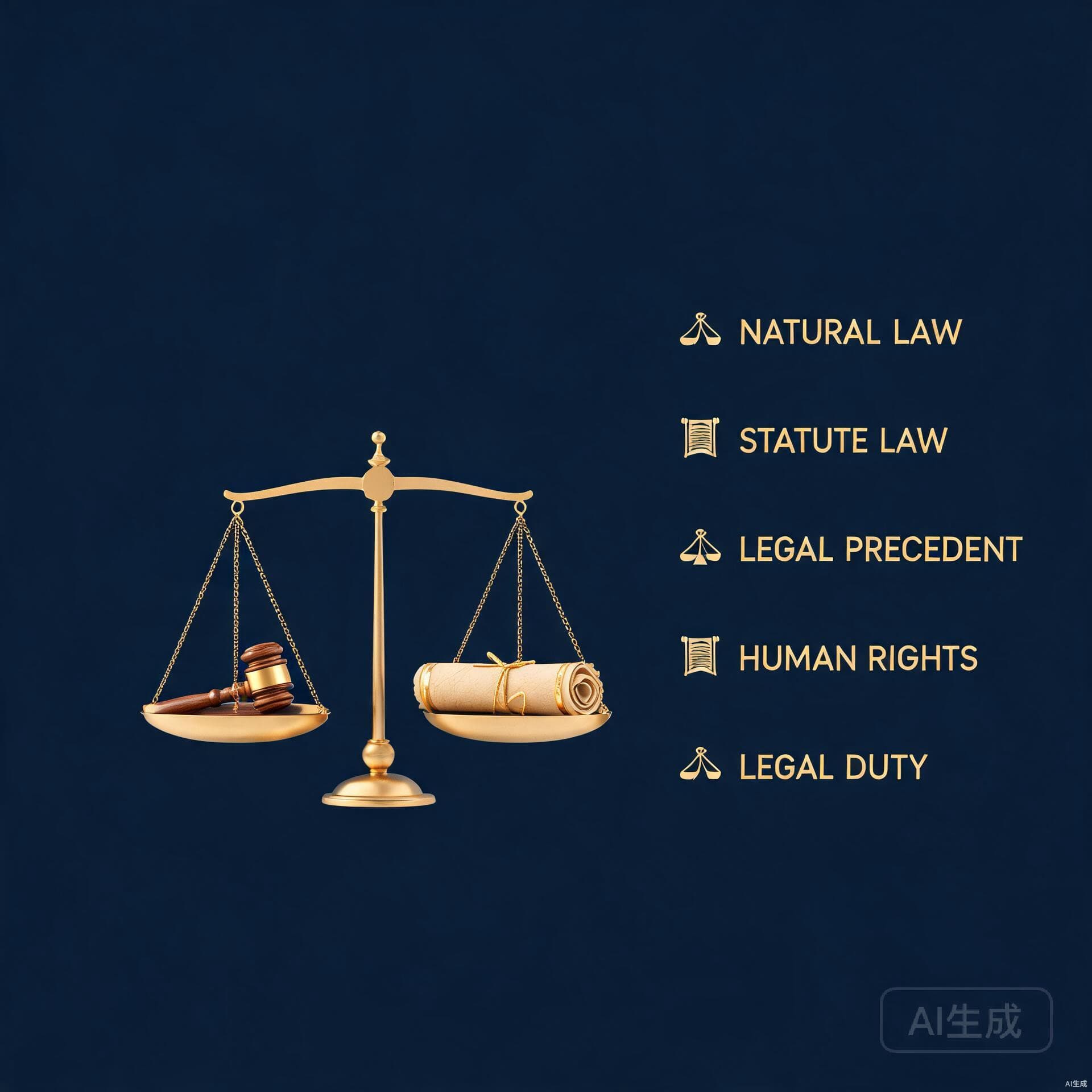
Natural law vs positive law
PRINCIPLE 03
Justice and legality
PRINCIPLE 04
Legal reasoning
PRINCIPLE 05
Rights and obligations
People in this tradition
Important Figures
Thomas Aquinas
A comprehensive introduction to Thomas Aquinas, the thirteenth-century Dominican philosopher whose synthesis of Aristotelian philosophy with Christian theology shaped Western intellectual life for centuries.
John Locke
An introduction to John Locke as the founder of British empiricism and liberal political philosophy, whose theories of mind, rights, and government shaped the modern world.
Aristotle
An evidence-led introduction to Aristotle, the fourth-century BCE Greek philosopher whose work shaped ethics, logic, metaphysics, and accounts of human flourishing.
Overview
Philosophy of law, also called jurisprudence, is the philosophical study of law and legal systems. It asks what law is, how it differs from morality and social custom, what grounds its authority, and how it relates to justice. These questions are not merely academic. Every legal decision, from the interpretation of a statute to the sentencing of a criminal, rests on assumptions about the nature of law and its proper role in human life. Philosophy of law makes those assumptions visible and subjects them to critical examination.
The field is traditionally divided into analytical jurisprudence, which asks what law is and how it functions, and normative jurisprudence, which asks what law ought to be. Analytical jurisprudence concerns the definition of law, the structure of legal systems, the nature of legal reasoning, and the relation between law and other normative systems such as morality and social convention. Normative jurisprudence concerns the standards by which laws should be evaluated, the demands of justice, the justification of punishment, and the moral limits of legal authority. These two dimensions are interconnected: one's account of what law is inevitably influences one's view of what it should be, and vice versa.
Origins
The philosophical study of law begins in ancient Greece. Aristotle distinguished between natural justice, which is the same everywhere and derives from human nature, and conventional justice, which varies from place to place and is established by human agreement. In the Nicomachean Ethics and the Politics, Aristotle argued that the purpose of law is to promote the good life of the community and that just laws are those that aim at the common advantage. This teleological conception of law, which sees legislation as a form of practical reasoning directed at the human good, became the foundation of the natural law tradition.
The natural law tradition reached its fullest medieval expression in the work of Thomas Aquinas. In the Summa Theologica, Aquinas defined law as "an ordinance of reason for the common good, made by him who has care of the community, and promulgated." He distinguished four types of law: eternal law, which is God's rational governance of the universe; natural law, which is the rational creature's participation in eternal law, knowable through reason; human law, which is the specific legislation derived from natural law to meet particular circumstances; and divine law, which is revealed through scripture. Natural law, for Aquinas, provides the moral standard by which human laws are to be judged: an unjust law, one that contravenes the natural law, is not truly a law but a corruption of law.
The modern period saw the emergence of legal positivism, which rejects the natural law claim that there is a necessary connection between law and morality. Thomas Hobbes argued that law is the command of the sovereign, backed by the threat of sanction, and that its validity does not depend on its moral content. John Locke, while defending natural rights, contributed to the analysis of the social contract as the basis of legal authority. Jeremy Bentham and John Austin developed the command theory of law, defining law as the command of a sovereign backed by sanctions, and insisted that the question of what the law is must be separated from the question of what it ought to be. This separation thesis became the defining commitment of legal positivism.
Core Ideas
Natural Law vs Positive Law
The central debate in the philosophy of law is between natural law theory and legal positivism. Natural law theory holds that there is a necessary connection between law and morality: a law that gravely violates natural justice is not truly law, or at least lacks the full authority of law. This view, rooted in Aristotle and Aquinas, insists that law is not merely the expression of power but a rational enterprise directed at the common good. The most influential modern statement of this position is Lon Fuller's account of the "inner morality of law," which argues that a legal system must satisfy certain procedural requirements, such as generality, publicity, prospectivity, clarity, consistency, possibility of compliance, stability, and congruence between official action and declared rule, in order to function as law at all.
Legal positivism, by contrast, holds that the validity of a law depends on its social sources, not on its moral content. A law is valid if it is enacted by the proper authority through the proper procedures, regardless of whether it is just or unjust. The most influential statement of modern positivism is H. L. A. Hart's The Concept of Law (1961), which rejected Austin's command theory and proposed instead that law is a system of rules, comprising primary rules that impose obligations and secondary rules that govern the recognition, change, and adjudication of primary rules. The rule of recognition, which specifies the criteria by which a rule is identified as part of the legal system, is the foundation of a legal order.
The Hart-Fuller debate of 1958, prompted by the question of how to treat the laws of Nazi Germany, remains the touchstone of this discussion. Hart argued that morally iniquitous laws are still laws and should be recognized as such, even if they are so evil that they should not be obeyed. Fuller argued that a legal system that systematically violates basic requirements of legality, such as retroactive legislation and secret decrees, ceases to function as a legal system at all. The debate raises fundamental questions about the nature of law and the relation between legal validity and moral truth.
Justice and Legality
The relationship between law and justice is a central concern of normative jurisprudence. Law and justice are not the same: a law can be unjust, and justice may demand the violation of existing law. The question is how the two concepts relate. John Rawls argued that justice is the first virtue of social institutions and that laws must be evaluated against principles of justice that are themselves derived from a fair procedure of social choice. Ronald Dworkin argued that law is not merely a set of rules but an interpretive practice that includes principles and policies, and that judges must decide hard cases by constructing the best moral interpretation of the legal system as a whole.
The distinction between formal and substantive justice is also important. Formal justice requires that like cases be treated alike, that the law be applied consistently and without arbitrary discrimination. Substantive justice concerns the content of the law: whether the outcomes it produces are fair, whether it protects fundamental rights, whether it distributes benefits and burdens equitably. A legal system can satisfy formal justice while producing substantively unjust outcomes, as in the case of systematically discriminatory laws that are applied consistently. The philosophical challenge is to articulate standards of both formal and substantive justice and to understand how they interact.
Legal Reasoning
How do judges reason when they decide cases? This question, central to the philosophy of law, has generated several competing accounts. The formalist view holds that legal reasoning is a form of deductive logic: the judge identifies the relevant legal rule, determines the facts of the case, and applies the rule to the facts through a syllogism. The legal realist view, associated with Oliver Wendell Holmes and the American legal realists, holds that legal reasoning is far less determinate than formalism suggests. The law is not a closed system of rules but a set of tools that judges use to justify outcomes that are ultimately determined by policy considerations, social context, and judicial temperament.
Hart argued that legal rules have an "open texture": they are determinate in the core cases they were designed to address but indeterminate in penumbral cases that the drafters did not foresee. In these penumbral cases, judges must exercise discretion, drawing on moral and policy considerations to fill the gaps. Dworkin rejected this account, arguing that even in hard cases there is a right answer, determined by the principles that provide the best moral justification of the legal system as a whole. The debate between Hart and Dworkin continues to define the philosophy of legal reasoning.
Rights and Obligations
The concept of a right is one of the most important and contested in legal philosophy. Locke argued that individuals possess natural rights to life, liberty, and property that precede the establishment of government and that the purpose of law is to protect these rights. Bentham famously dismissed natural rights as "nonsense upon stilts," arguing that rights are creations of law and that the language of natural rights obscures the real question of what legal rights ought to be created.
The Hohfeldian analysis of rights, developed by Wesley Newcomb Hohfeld in the early twentieth century, distinguishes four senses of "right": claim-right, privilege, power, and immunity, each correlated with a distinct jural opposite and correlative. This analytical framework clarified the logical structure of rights discourse and showed that statements about rights are often ambiguous, conflating different jural relations. Contemporary legal philosophy continues to debate the nature and ground of rights, the relation between legal and moral rights, and the role of rights in defining the boundaries of legitimate state action.
Major Thinkers
Aristotle (384-322 BCE) provided the first sustained philosophical analysis of law in the Politics and the Nicomachean Ethics. His distinction between natural and conventional justice, his account of law as a instrument for promoting the common good, and his analysis of distributive and corrective justice laid the foundation for subsequent jurisprudence.
Thomas Aquinas (1225-1274) developed the most influential statement of natural law theory in the Summa Theologica. His definition of law, his fourfold classification, and his insistence that unjust laws are perversions of law shaped the natural law tradition for centuries and continue to influence contemporary debates.
H. L. A. Hart (1907-1992) transformed legal philosophy with The Concept of Law. His analysis of law as a union of primary and secondary rules, his rule of recognition, and his defense of the separation of law and morality defined the agenda of analytical jurisprudence for the second half of the twentieth century.
Important Books
H. L. A. Hart's The Concept of Law (1961) is the most influential work of legal philosophy in the twentieth century. Its analysis of the rule of recognition, the union of primary and secondary rules, and the open texture of legal language remains the starting point for contemporary jurisprudence.
Aquinas's Summa Theologica contains the classic statement of natural law theory in the Treatise on Law (I-II, qq. 90-97). Its definition of law, classification of law into eternal, natural, human, and divine, and analysis of the relation between law and morality continue to shape the natural law tradition.
John Austin's The Province of Jurisprudence Determined (1832) is the foundational text of legal positivism. Its command theory of law, defining law as the command of a sovereign backed by sanctions, dominated English jurisprudence for a century and set the terms of the positivist tradition that Hart would later revise.
Related Quotes
The philosophical tradition of law has produced memorable formulations of its central ideas. Aristotle's observation that "the rule of law is preferable to that of any individual" captures the ancient conviction that law, not personal power, should govern human affairs. Hart's claim that "law is a union of primary and secondary rules" distills the analytical insight that legal systems are not merely collections of commands but structured normative orders. These formulations continue to inform public discourse about the rule of law, the legitimacy of legal authority, and the demands of justice.
Related Topics
Philosophy of law connects to the broader topic of knowledge and truth, because the law is fundamentally concerned with the establishment of facts, the interpretation of texts, and the determination of what is true and just in particular cases. Legal reasoning is a form of practical reasoning that seeks truth under conditions of uncertainty, competing interests, and limited evidence. The philosophy of law also raises questions about the truth of legal propositions: is a statement of law true or false in the same way that a statement of fact is true or false, or does legal truth have a different character?
The understanding reality collection includes philosophy of law because legal systems are among the most important structures through which human beings organize their shared reality. Law defines what counts as a person, a property, a contract, a crime, and a right. It constructs the normative framework within which social life takes place, and understanding that framework is essential to understanding the reality of human social existence.
Sources
- Stanford Encyclopedia of Philosophy, "Philosophy of Law." A comprehensive scholarly reference covering natural law, positivism, legal reasoning, and contemporary debates.
- H. L. A. Hart, The Concept of Law, 3rd ed. (Oxford: Oxford University Press, 2012). The foundational text of modern analytical jurisprudence.
- Thomas Aquinas, Summa Theologica, trans. Fathers of the English Dominican Province (New York: Benziger, 1947). The classic statement of natural law theory.
Continue Learning
Knowledge NetworkDeep Dive
Explore related concepts
- thinker
Thomas Aquinas
Related through Justice
- answer
What Is Philosophy of Law?
Related through Justice
- thinker
John Locke
Related through Justice
- collection
Understanding Reality
Related through Justice
- topic
Knowledge & Truth
Related through Truth
- wisdom
Truth
Related through Justice
- wisdom
Justice
Related through justice
- thinker
Aristotle
Direct archive relation
Archive references
Sources
- 01Philosophy of LawBy Stanford Encyclopedia of PhilosophyConsult source
- 02The Concept of LawBy H. L. A. Hart3rd ed. Oxford: Oxford University Press, 2012.
- 03Summa TheologicaBy Thomas AquinasTrans. Fathers of the English Dominican Province. New York: Benziger, 1947.
ZHAIBIAN Editorial Board reviewed
Reviewed by ZHAIBIAN AI Editorial Review · 2026-08-04