Archive navigation
Knowledge Path
Thinker
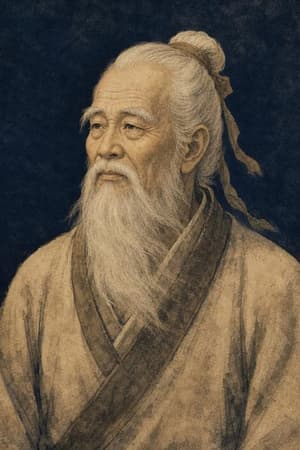
Lao Tzu
Philosophy
Books
Wisdom Concepts
Quotation archive
Selected Quotes
“The Dao that can be told is not the eternal Dao; the name that can be named is not the eternal name.”
“When people are born, they are soft and yielding; when they are dead, they are stiff and hard. Plants are born tender and pliant; when they are dead, they are brittle and dry. Thus the stiff and hard are companions of death; the soft and yielding are companions of life.”
“Attain the utmost in emptiness; hold fast to the utmost in stillness. The ten thousand things rise together, and I watch their return.”
“Yield and remain whole; bend and remain straight; be hollow and remain full; be worn and remain new.”
“Act by not acting; do by not doing. Taste the tasteless; make the small great, the few many; repay resentment with inner power.”
“Nothing in the world is softer or weaker than water, yet nothing is better at overcoming the hard and strong. This is because nothing can replace it.”
“True words are not beautiful; beautiful words are not true. The good do not argue; those who argue are not good.”
“The highest good is like water.”
“One who knows others is intelligent; one who knows himself is enlightened.”
“The Way is constantly nonacting, yet nothing is left undone.”
“In the pursuit of learning, every day something is acquired. In the pursuit of the Way, every day something is dropped.”
“A journey of a thousand miles begins beneath one's feet.”
“Once upon a time, I, Zhuangzi, dreamt I was a butterfly, fluttering hither and thither, to all intents and purposes a butterfly. I was conscious only of my happiness as a butterfly, unaware that I was Zhuangzi. Soon I awaked, and there I was, veritably myself again. Now I do not know whether I was then a man dreaming I was a butterfly, or whether I am now a butterfly, dreaming I am a man.”
Biography
Laozi, also written Lao Tzu in older English transliteration, is at once a philosophical name, a traditional author, and a figure of later religious devotion. That multiplicity is the first fact a responsible introduction must acknowledge. The Internet Encyclopedia of Philosophy describes “Laozi” as the name of a legendary Daoist philosopher, the alternate title of the early Chinese text commonly called the Daodejing, and later a deity within organized religious Daoism. These are related histories, but they are not the same thing.
Traditional accounts portray Laozi as an older contemporary of Confucius and as the author of a short work later called the Daodejing or Tao Te Ching. Modern scholarship does not treat that biography as securely established. The earliest textual attributions are later than the supposed lifetime of the sage, and the received text has a complex transmission history. It is therefore more accurate to say that the Daodejing is traditionally associated with Laozi than to state that a historically documented individual wrote it exactly as it now stands.
Historical Context
The Daodejing belongs to the intellectual world of early China, a period marked by political competition, debates about governance, and reflection on how inherited norms could guide unstable societies. The Stanford Encyclopedia’s Laozi entry emphasizes both the text’s canonical status and the interpretive difficulty of assigning it a single author or a simple philosophical purpose. Some readers foreground metaphysics; others read it as ethical or political reflection. Both approaches must be tested against particular passages rather than assumed in advance.
The name “Daoism” can also mislead if it suggests a unified movement beginning directly with one person. Early texts such as the Daodejing and the Zhuangzi became central to later Daoist traditions, but philosophical and religious developments unfolded across centuries. A ZHAIBIAN profile should therefore avoid projecting later institutions backward onto the uncertain historical Laozi.
Core Ideas
The daodejing names two central terms: dao (way, path, or course) and de (virtue, potency, or efficacy). Neither has a single fixed English equivalent. The text often questions rigid naming and deliberate control, inviting readers to notice how language can mistake a temporary distinction for the whole of reality. This does not make it anti-intellectual. It asks what kinds of knowing and acting become possible when people are less attached to forceful certainty.
Another key expression is wu wei, often rendered “non-action” but better approached as action that does not rely on coercive striving. In political and personal contexts, it can suggest responsiveness, restraint, and an ability to let processes develop without needless interference. It should not be turned into a command to do nothing. Its meaning varies with context and with translation.
Philosophy
The Daodejing repeatedly reverses ordinary measures of success: softness can outlast hardness, emptiness can make a vessel useful, and humility can be a form of strength. Such lines have encouraged modern readers to treat the book as a manual of calm. That use can be fruitful, but it risks erasing its political edge. The text also speaks about rulers, warfare, taxation, and the dangers of aggressive government.
Its philosophical challenge is not simply to prefer simplicity. It is to ask whether excessive desire, display, categorization, and control disturb the conditions in which people can live well. The answer is not a detailed institutional program. Instead, the text offers compact images that make readers reconsider habits of domination and self-assertion.
Major Works
The major work traditionally associated with Laozi is the Daodejing, also known as the Laozi and in older Romanization as the Tao Te Ching. It is conventionally divided into eighty-one chapters, though manuscript discoveries and textual scholarship make clear that its history is more complicated than a single finished book authored at one moment. Any quotation in this archive should identify a translator and chapter, since wording varies substantially across editions.
Famous Quotes
This review draft intentionally avoids presenting a free-floating “Lao Tzu says” list. The Daodejing is highly translation-sensitive, and popular online versions often remove lines from their chapter and interpretive setting. Future quotations will be added only from a named edition with chapter references, accompanied by an explanation of how the wording functions in the passage.
Influence Today
The Daodejing has shaped philosophical reflection, literary culture, religious Daoism, political thought, and global discussions of simplicity and balance. Its influence is not evidence that every modern use of “the Tao” is historically faithful. The text has been read through many traditions and languages. Its continuing value lies partly in this capacity for re-reading, but responsible interpretation must preserve the differences among those readings.
Sources
- Stanford Encyclopedia of Philosophy, “Laozi.” Scholarly overview of the text, its authorship questions, and major interpretations.
- Internet Encyclopedia of Philosophy, “Laozi.” Overview of Laozi as philosopher, text title, and later religious figure.
- Laozi, The Daodejing, trans. Philip J. Ivanhoe (Hackett, 2002). Use this or another named translation for chapter-specific quotation work.
Learning Path
Part of a Structured Collection
Continue Learning
Knowledge NetworkNext Step
Continue your learning path
- book
Tao Te Ching
Related through Taoism
- thinker
Zhuangzi
Related through Taoism
- book
Zhuangzi
Related through Taoism
- answer
What Is Wu Wei?
Related through Taoism
- answer
What Is Taoism?
Related through Taoism
- quote
A Journey Begins Beneath One's Feet
Related through Taoism
- philosophy
Chinese Philosophy
Related through Taoism
- quote
Knowing Oneself
Related through Taoism
Archive references
Sources
- 01LaoziBy Stanford Encyclopedia of PhilosophyConsult source
- 02LaoziBy Internet Encyclopedia of PhilosophyConsult source
- 03The DaodejingBy Laozi; translated by Philip J. IvanhoeIndianapolis: Hackett, 2002.
ZHAIBIAN Editorial Board reviewed
Reviewed by ZHAIBIAN AI Editorial Review · 2026-07-21