Archive navigation
Knowledge Path
Thinker
Thich Nhat Hanh: Philosophy, Mindfulness & Legacy
Philosophy
Wisdom Concepts
Quotation archive
Selected Quotes
“Whatever is dependently co-arisen, that is explained to be emptiness. That, being a dependent designation, is itself the middle way.”
“Good friends, in this teaching of mine, from ancient times up to the present, all have established no-thought as the main doctrine, non-form as the substance, and non-abiding as the basis.”
Biography
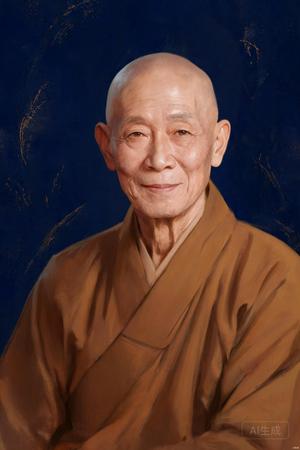
Thich Nhat Hanh (1926-2022) was a Vietnamese Zen monk, poet, and peace activist who became one of the most influential voices in modern Buddhism. He was ordained as a young monk in Vietnam, and across a long life he taught, wrote dozens of books, and built a global community centered on the simple practice of being present. During the Vietnam War he coined the term "engaged Buddhism" to describe a path that doesn't hide from the world but steps into it with compassion. He spent decades in exile in France, where he founded Plum Village, a monastic community that became a magnet for people seeking a calmer way to live.
Historical Background
Hanh came of age in a Vietnam torn by colonial rule and then by war. For him, sitting in a meditation hall while bombs fell outside felt like a betrayal of the teaching, and he argued that mindfulness had to spill into the street, into politics, and into the care of the wounded. That conviction put him at odds with both sides of the conflict and eventually drove him into exile. The term "engaged Buddhism" was his way of saying that inner peace and social action aren't rivals — they're the same practice aimed in two directions.
Core Ideas
The heart of Hanh's teaching is mindfulness, which he liked to describe in plain, warm terms: coming back to the present moment, breathing, and really being here instead of worrying about yesterday or tomorrow. He turned the old Zen emphasis on direct experience into something anyone could do, whether they'd ever sat on a cushion or not. He also taught that suffering and happiness are interwoven, and that recognizing your own suffering is the first step to easing it — a Buddhist point that echoes the Buddha's own diagnosis of suffering in the Four Noble Truths. His trademark phrase, "I have arrived, I am home," captures his sense that the present moment is the only place peace can actually live.
Major Works
Hanh wrote more than a hundred books, many of them short and aimed at ordinary readers. The Miracle of Mindfulness is the classic entry point, a gentle guide to bringing awareness into daily life. Being Peace lays out his vision of engaged Buddhism and how inner work supports outer compassion. Later works like The Heart of the Buddha's Teaching unpack classical Buddhist doctrine in his signature warm, plain style. What stands out across all of them is the same thread: the ancient tradition of Zen made immediate and livable.
Philosophical Influence
Hanh did more than almost anyone to bring Buddhist mindfulness into the mainstream of Western life. Meditation apps, workplace "mindfulness" programs, and the popularity of practices like walking meditation all owe something to the bridge he built between the monastery and the modern world. He also reshaped how Buddhism talks about ethics, insisting that compassion isn't complete until it acts on behalf of others. For millions of readers, his books were the first place they met the idea that peace is not a distant ideal but something you can practice while you're washing the dishes.
Related Concepts
Hanh's thought is rooted in classic Mahayana Buddhism, especially the emptiness taught in the Heart Sutra, which he read as a call to interconnection rather than a cold negation. His practice of sitting and breathing descends from zazen and the Zen tradition that runs back through Huineng and beyond. And his insistence on acting for others reflects the bodhisattva ideal, the Mahayana commitment to the welfare of all beings. If you want to feel the shape of his worldview, read the Heart Sutra alongside his own books — the ancient and the modern are the same teaching, spoken in different voices.
Sources
See the source records in the Frontmatter. Primary works by Thich Nhat Hanh are cited alongside scholarly overviews of Buddhism and Chan Buddhism.
Continue Learning
Knowledge NetworkDeep Dive
Explore related concepts
Archive references
Sources
- 01BuddhismBy Stanford Encyclopedia of PhilosophyConsult source
- 02Buddhism-ChanBy Stanford Encyclopedia of PhilosophyConsult source
- 03The Miracle of MindfulnessBy Thich Nhat HanhBoston: Beacon Press, 1975.
- 04Being PeaceBy Thich Nhat HanhBerkeley: Parallax Press, 1987.
ZHAIBIAN Editorial Board reviewed
Reviewed by ZHAIBIAN AI Editorial Review · 2026-08-08